Friday, 12 August 2011

Generation P (film)


Generation P is the first feature-length screen adaptation of the eponymous novel by the Russian author Victor Pelevin. Work on the film begun at the end of 2006, and it was released in Russian cinemas on April 14, 2011. 
Like the novel, the film has a complex structure and many intertwined storylines. During work on the film, the plot was subjected to a major reworking: in contrast to the novel, the story of which ends at the end of the 1990s, the film is brought into the present day and even extended slightly into the future. The film is also in many respects built on hallucinations, including a speech by Che Guevara concerning how and why television is destroying humankind.
The film follows Vavilen Tatarsky as he struggles to work and adapt to life in Moscow in the newly independent Russia. Vavilen is a very skilled writer of advertisements, and so he begins working in an advertising agency which promotes Western brands, adapting their advertising campaigns to the "Russian mentality."

Monday, 1 August 2011

Confessions


Despite having already read the book and knowing fully well what was coming, I was still shocked. Confessions is a disturbing film, a morbid film and what happens is mind-blowing. It is disheartening, scary even, to see middle school students who are close to demented, with no heartfelt mercy or sympathy, who can kill freely for baffling reasons. At the same time, the adult characters are just as heartless. The teacher, Yuko Moriguchi (played by Takako Matsu) is intimidating – her only purpose in life after the death of her daughter is revenge; far from the typical adult mentor and role model that we are so used to seeing.

But the reason why I gave a higher rating to the film than the novel was because the director, Testuya Nakashima, did a marvelous job at taking a mediocre book with stagnant flow and transforming it into an intelligently crafted suspenseful film that maintains realism and proper flow. The 'blue' look (most obvious in the classroom scenes) and the ominous, monotonous soundtrack just adds to the film's darkness. Though the initial confession by Ms. Moriguchi is rather long winded, the rest of the film will consistently confuse, startle and even upset audiences. You will see children involved in relentless bullying and even cold-blooded murder – the middle school students' performances are astonishingly convincing. By the end of the film, you may feel cheated at such a disgusting and horrifying ending. You will be astounded and maybe even depressed at mankind's depravity – if that was the intention of both the author and director, they succeeded in playing a cruel joke on us all.

Friday, 22 July 2011

Kirikou and the Sorceress

Kirikou and the Sorceress (French: Kirikou et la sorcière) is a 1998 Franco-Belgian animated film written and directed by Michel Ocelot. Drawn directly from West African folk tales,[2] it tells of how a newborn boy saves his village by ridding them of the evil witch Karaba. It was so successful that it was followed by a midquel,Kirikou et les bêtes sauvages, released in 2005, and adapted into a stage musical, Kirikou et Karaba, first performed in 2007.

Thursday, 9 June 2011

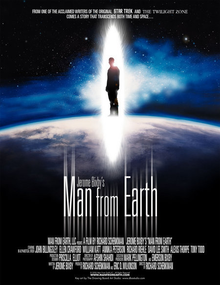
Man from Earth


The Man from Earth is a 2007 science fiction film written by Jerome Bixby and directed by Richard Schenkman. The film stars David Lee Smith as John Oldman, the protagonist of the story. The screenplay for this movie was conceived by Jerome Bixby in the early 1960s and was completed on his death bed in April 1998, making it his final piece of work. The movie gained recognition in part for being widely distributed through Internet peer-to-peer networks and its producer publicly thanked users of these networks for this.
The plot focuses on John Oldman, a departing teacher who claims to be a Cro-Magnon (or Magdalenian caveman) who has somehow survived for over 14,000 years. The only setting is in and around Oldman's house during his farewell party, with the plot advancing through intellectual arguments between Oldman and his fellow faculty.

Monday, 6 June 2011

Noriko's Dinner Table


Noriko's Dinner Table (紀子の食卓 Noriko no Shokutaku?), is the sequel to the cult film Suicide Club (Jisatsu Sākuru), a Japanese film concerning a mass suicide of 54 schoolgirls and how it leads the law to a shadowy cult. It won the Don Quixote award at the 40th Karlovy Vary International Film Festival in the Czech Republic and a special mention. The movie was written and directed by Sion Sono. This film deals with various themes such as the generation gap on modern families, the nature of happiness, suicide, the lack of real communication, the alienation it causes and how the Internet is used in an attempt to mend it, and the concept of family. It takes place before, during, and after the first film, in hopes of explaining some of the lingering mysteries that film left behind. The film was released theatrically in Japan on September 23, 2006.

Suicide Club


Suicide Club, known in Japan as Suicide Circle (自殺サークル Jisatsu Sākuru?) is a 2002 Japanese independent horror film that gained a considerable amount of notoriety in film festivals around the world for its controversial subject matter and gory presentation, and has since developed a significant cult following. It won the Jury Prize for "Most Ground-Breaking Film" at the Fantasia Film Festival. The movie was written and directed by Sion Sono. It deals with a wave of seemingly unconnected suicides that strikes Japan and the efforts of the police to determine the reasons behind the strange behavior.